Thursday, 8 March 2018

Workplace math courses


Workplace Math Courses:

Today in class, we talked about the grade 11 and 12 workplace math courses. I had the pleasure of doing my leading activity presentation and I was very happy to do it for these courses. It allowed me to read the curriculum more closely, and I learned that I would love to teach these courses. It is a course which finally teaches the students how to do very needed activities, such a taxes, measuring things, and how mortgages and other essential parts of life work. Essentially, all the things I wish I learned in high school, but am just now facing without any knowledge. Luckily, my mom is able to teach me all of these things as I face them, but I know not everyone will have that same advantage, so learning them in school is perfect. To me, this is what all students should have to learn before graduating.

For my activity, I had students measuring different household objects, in both the imperial and metric system. I think this is a very important skill to have, as many careers use both. For example, the carpentry business still uses the imperial system, but some bigger companies are forced to write plans and such in the metric system. Or, some plumbing companies use the metric system, but need convert to the imperial system to order materials from the states. As well, I have witnessed many people in my family who cannot convert mL to ounces and vice versa. This is not good, as many recipes use one or the other.
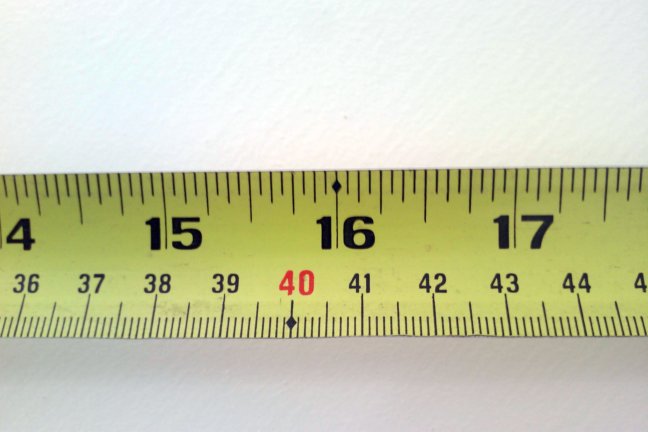
Image result for measuring tape with metric and imperial

I also think this lesson would be useful, as it allows students the opportunity to practice measuring things. Unless you grew up in a household where this was a common thing (I live in a carpenters house), then even using a measuring tape can be a foreign activity, where the lines are gibberish to you.

All in all, I would love to one day teach the grade 11 and 12 workplace math courses!
What are your thoughts?
Should these courses be mandatory for all students?
Do you have any really cool activities or ideas for these courses?
Let me know,
Miss Sydor

Thursday, 15 February 2018

Technology in the Classroom

Technology in the Classroom:

Today we talked again about both the pros and cons of technology in the classroom. Sure there is a lot of pros: students are already addicted to their phones, so why not utilize that. There's a wealth of apps and games to get them engaged, that make learning fun. It allows them to have access to so much information at the push of a button, and can give them another perspective if they just aren't understanding what you're saying. BUT, what about the negatives to this: They can find solutions without doing the work, they can take advantage of phone or computer time to just chat with friends, and they don't have to compute things by hand, when they can just put it into graphing calculators and other similar apps. The newest concern, is photomath. This app allows you to take a picture of a problem, whether handwritten or typed, and it not only gives you the final solution, but also the step-by-step process. This can be both a good and a bad thing. To me, its a great idea. If students are doing homework and they can't seem to get on the right path, this allows them instant access to a starting point, rather than having to wait till the next day to ask you, the teacher. However, it also allows lazier students to just copy the answers and move on, without actually doing the work. To most people, this is a negative, to me, its not all bad. Sure they aren't really using much brain power, but realistically, these are probably some of the same students who normally just wouldn't do the homework. Although they are just copying answers, at least they are getting exposure to the questions, and going through the routine of the step-by-step process. I find I remember a lot more when I write things and don't just look at them. These students are now writing the process rather than just looking at it when it gets taken up in class. To me, this is at least a little better.

Photomath app, gives full solutions
However, then there becomes the question of technology during tests and assignments. Since we are now living in the age of technology, should we allow students to use it as a resource. As Lisa mentioned in class, people once freaked out about students using calculators to find the roots of numbers. However, I believe it would now be rare to find people who can do it by hand, and it is commonly done with a calculator, even on tests and assignments. Perhaps this is the beginning of new age math, and technology will one day be expected for assignments, as we advance. To me, I believe there is a time and place for technology during tests and assignments. I think students should learn basic, in their head, math. I also think, once those skills are learned, why not use technology to speed up this process so that you can learn more in depth knowledge, and expand on these skills without doing everything by hand, every time. To do this, I believe I would not allow students technology for certain parts of tests and quizzes, but once those were handed in, why not allow them to use the resources they now easily have at their fingertips?

Whats your thoughts on technology in classrooms? Not only for learning, but for showing their knowledge on tests and assignments? I'd love to hear from you!

That's all for today,
Miss Sydor

Monday, 12 February 2018

Hands on Activities for Grade 11 College Math

Today we explored the grade 11 college math course. We looked at some statistics, and I found it very interesting that so many people take this course, which I did not realize. In the DSBN, 29% of students actually take this course in grade 11. It allows you to continue in college math, and eventually go to college, which is many students preferred path after high school.

The first activity we looked at, had to do with finding the mean, mode, and median. It had students use their 7 cards (from a regular deck of playing cards, from ace to 10), to first find the mean. This meant the students had to add up the 7 cards, and then divide by 7. This number was then recorded, and it was a game to see who got the highest mean of 3 turns. I really liked this game idea as it allowed students to have physical cards to add up. It allows them to practice adding easy numbers together, and sort them so they are less likely to miss a number. It also adds a competitive element, which always seems to get students excited, and can be adapted easily for mode and median as well. According to our teacher, some students have never seen a deck of cards before. I found this absolutely shocking as I grew up playing endless amounts of cards, as did most of my peers. However, then I thought about it, and children now grow up with ipads and so much technology, as well as in so many different cultures, that it doesn't really surprise me. I think this makes it that much more important to add aspects of cards throughout math class, so that when you really want to use them for lessons such as those on probability, the students are more used to them.


The second activity we did, was to create a box that could hold three chocolates, while leaving the least amount of wiggle room, and using the least surface area of materials. I absolutely loved this activity, and would love to use it in my classroom. It forces students to plan and initiate their ideas, and allows them time to explore options using a hands-on approach. Since there isn't always a lot of hands-on activities in math, this is one I would love to utilize. As well, I think this is a great lesson, as it shows students real life questions they may need to answer if they go into certain jobs. A lot of food packaging companies face problems like these, and answers are obtained through collaboration, which is what is occurring here. It also allows students to work in groups, and forces them to come to a group consensus on what they want to build. As well, once everyone is finished, groups could present their design and say why they chose it. I really like this idea as it allows students to see there is not always just one right answer, but instead, many different options, some of which may have never even crossed their minds. Below, is an image of the design our group created. 


What do you think of the two ideas above? Could you see yourself using them if you were teaching the grade 11 college math course? Do you have any other hands-on activities for this course? Let me know your thoughts!

That's all for today,
Miss Sydor

Tuesday, 30 January 2018

Hands On Activites for grade 11

Hands on Activities for grade 11's

This week we talked about grade 11 functions, and how we could incorporate hands-on activities. A lot of the activities dealt with angles and using SOH CAH TOA correctly. What I found interesting was that the activities were created in order for students to practice in a hands-on way rather than just at their desks. The activities were not quite to teach the lesson, but rather to practice. Most students do not like to sit and do work, we all know this. To combat it, one student proposed a scavenger hunt type practice, where there answer from one problem, would be at the top of a different page scattered somewhere around the room. Once they got their answer, they needed to walk around to find their answer, and hence the next question they needed to work on. I found this was a great idea, as it made it a race, everyone likes to be competitive, and also got students up and moving which isn't always easy in a math classroom.


Another students activity was to show what a sin graph really represents. I think this is a very hard concept for many students. He had an app on the computer that allowed you to follow one seat on a Ferris wheel, and it plotted its path, as a sin function. I think this is super important as even I never used to put much thought into what I was really representing. This is a great visual to show where it can be used in real life situations. As well, he showed a few different dances for each of the different graphs. Although this wasn't his activity, it really resonated with me. Students rarely get to move or represent things in a math class, so for kinesthetic learners, it allows them to move to remember something, which I find extremely useful ! I completely wish I had seen something like that when I was a student. Although I cannot dance well myself, I would love to share it with my classes in the future. 

The last thing I wanted to share with you was my teachers idea. She said she used to get her students to practice by making it a relay race. She would have all the same practice questions as she would normally just give them on a sheet, but she cut them up into strips. Students worked as partners and when they finished the question they would run up to get it checked, and then receive a new question. It was also a race, which makes students want to do so many more questions ! Rather than waste a period where students pretend to work, this forced them to be proving their answers and help each other through the review. I will definitely use this idea in my classroom as well ! 

Do you have any neat ideas to get students to practice more efficiently ? Do you see yourself using any of these ideas ?
Let me know your thoughts !

That's all for today, Miss Sydor


Monday, 29 January 2018

Hands on Functions Activities

Hands on Functions Activities:

Today in class, we continued our presentations of different hands on activities, with the focus being on grade 10 functions. My first thought when I heard what class the presentations were for, was that they would probably have to stretch to make hands-on activities fit the curriculum. However, I was very pleasantly surprised! The first activity was for visualizing angles of depression, and different ways to represent 3D objects as 2D. Since most students find it very difficult to put a word problem into a picture (Including myself), I found this extremely useful! We used different colours of strings and had people stand at different spots, and different heights, in order to duplicate what the word problem said. Once students were set up, it was easy for the leader to point out where different angles were, and to transform the visual we were seeing onto paper. I was very impressed with how much it helped me to see what was going on, so I assume it would be very useful for students as well.

Another activity we did that I found very useful, was for trigonometry proofs. We had a bunch of rectangles to cut out, with various trig proofs on them. We then had to arrange these rectangles in order to prove the first one could be turned into the most simplified form which we put last. I always had trouble with trig proofs in high school, and I feel the one thing that got to me the most was always erasing or crossing out where I went wrong. I ended up using oodles of paper and getting continuously frustrated. However, with this method, if you get it wrong you can easily just change the orders of the paper, rather than starting ALL over! It was genius, and such a great way to practice.


For this same unit, we then got little squares which had proofs written on anywhere from two to four sides. We then had to rearrange these squares so that each proof matched to its corresponding proof. My group took forever, until we realized just like other puzzles, it is way easier to solve if you start with the border... oops! After many frustrating attempts we finally realized this, and started on the border. Eventually we completed it and felt very accomplished. I also think this was a great idea as it again let you practice without having to erase everything every time you went the wrong way.


All in all, I am finding the activities people are using in class are extremely good, no matter which topic they choose. I could see myself using every single one that I have seen. I am extremely glad that we have to do these presentations as by the end, I will have at least one great activity I can use in any math class I have to teach. 

Do you have any great ideas for a high school math class???

Could you see yourself using any of the activities I have talked about so far?

That's all for now, 
Miss Sydor

Monday, 22 January 2018

Hands On Activities for Learning

Hands on activities in math classes:

In class today we learned different hands on activities to incorporate into grade 10 math classes. I found this super helpful as students tend to learn much better by doing something rather than by listening to lectures. The first thing we learned was doodle notes. These give all the same information as traditional notes, but are more entertaining, and can be coloured in for those who need to do something. When I was in high school (and even now), I would have loved these ! I find I am able to listen better and focus more, while I am doodling, so I assume other students would as well. Another reason I really like these kind of notes, is because it allows students to colour code their work if they wish, in order to visualize things better. It also makes the notes seem less intimidating, and more fun to reread when it comes to test and exam time.


The second activity we tried was a game which forced us to practice our Pythagorean theorem calculations. It involved rolling the dice, and using those two numbers as two sides of the triangle, leaving us to find the third side, in order to move around the board. There were also questions that you had to answer if you landed on certain spots on the board, which involved perimeter and area. I absolutely loved this idea for multiple reasons. First, it allowed students to practice all different types of triangles, as it was all in the hands of the dice. As well, it meant the teacher didn't have to come up with numerous practice scenarios. You would also be able to change the question cards to whatever concept you felt your students needed to practice. Since it is in a game format, the students don't even realize how many practice questions they are doing. Lastly, I think this game format would be easy to change to accommodate many different math concepts, allowing you many more times to use it. All in all, this game idea really got me thinking, and wanting to try to use it in my classroom. Although it might take a bit to get organized and create the game in advance, I think it is well worth it. 


Although going through these presentations takes up a lot of time, I am really enjoying them, and find them extremely useful. I find so many people keep pushing to get teachers to do more interactive activities, yet they never actually give useful ideas, or realistic advice on how to achieve it. However, with these presentations we are gathering ideas, handouts, and lessons for all different grades, strands, and classes, that fully fit the Ontario curriculum. 

What do you guys think of these presentations? Are they useful? Can you see yourself using these activities in your classroom?

That's all for today, 
Miss Sydor

Thursday, 11 January 2018

Destreaming grade 9

De-streaming grade 9 math classes: The good and the bad

In class, we talked about de-streaming grade 9, aka not having academic and applied classes, but rather just one class with all students. Although I know there would be many difficulties that would need to be overcome, I do think it is a good idea. Now that I've realized not all grade 7/8 math classes are taught by specialized math teachers (since not all schools have rotary), I think grade 9 should be used to get all students on the same playing field. Once they are all level in what they have been taught, then they can decide if they want to take an academic or applied math class the following year. I feel like if I had to teach an English or history class in grade 7 or 8, I wouldn't be passionate or very good, and that would rub off on my students. Since many people seem to hate math or think they aren't good at it, their attitudes could definitely rub off on the students, hence making them think they should go into an applied class rather than an academic one. As well, students are still so young while in grade 9. So much can change during their transition into high school, and I believe their options should stay open while going through this. As well, the students may have been or may not have been good at math in middle school, compared to the kids in their small classes, but perhaps that will all change in high school when the population of students is much different. By giving all the students the same start, I believe it will be very beneficial for the rest of their high school career.

I do understand this could be very difficult for teachers as it would increase the range in students abilities. However, each class is already diverse and I believe the students would benefit from this as you could make your class a very peer taught environment. The students who are excelling would benefit from explaining the concepts to the students who aren't getting it, and the students who aren't quite getting it would benefit from having multiple people able to explain it, probably all in slightly different ways. As well, the students who would usually be in academic classes, would benefit from being forced to do more interactive or hands on learning which is usually emphasized more in applied classes. Whereas the students who do better with hands on activities, would benefit by gaining confidence that they can teach or help the more abstract students, therefore again benefiting all students.

Image result for merging


What do you think? Is de-streaming grade 9 math (and possibly more subjects) a good idea or a bad idea? Do you think it would benefit or harm the students and why? I would love to hear your ideas as well!

That's all for today,
Miss Sydor

Thursday, 9 November 2017

Grade 7/8 Math Curriculum

Grade 7/8 Math Curriculum

Today in class, we learned about the grade 7/8 math curriculum for two reasons. One, was because we are going to be qualified to teach them as I/S teachers, and two, because it shows us what theoretically, our grade 9's should know when they get to us. I think reason two is good enough reason to begin with as the curriculum shocked me! First, I had no idea that grade 7 and 8 students were suppose to be taught so much. Their curriculum for math really does have so many different needed learning blocks to get them off to a good start in grade 9, yet that is not always the case. As you can see in the picture below, we cut out all the expectations that would lend themselves to good starting blocks for one aspect in grade 9, and the list in grade 7 and 8 is massive!


I was also shocked, as I learned this class that not all grade 7 and 8 classes have rotary, Ie. specialized teachers teaching different subjects. Rather, the students have the same teacher for all courses. I seem to have been one of the lucky few that did go through rotary as a middle school student, and looking back, I believe it was definitely for the better. As a teacher, if I had to teach all subjects, I could definitely see myself, unknowingly, favour certain subjects over others just on the basis that I have more knowledge in them. Personally, I wouldn't really be that useful in teaching history or English, in comparison to math and science. In others cases, I find a lot of middle school teachers grew up terrified and uneasy with math, so I wouldn't be surprised if unknowingly, they pass on those same feelings or even just put less emphasize on learning those skills. To me, this is a shame.  Math is so important and a good basis is key in later success. A prime example of a poor start was my brother. He used to be very strong in math, until he had a teacher who couldn't see things from a different perspective. He did not like how my brother approached questions as it wasn't the same way as him. One day, this teacher told him he wasn't good at math, and never would be. This small act when he was a child changed his whole path. He kept telling himself he couldn't do math throughout school, and never had any confidence in it. To this day, he still believes he cannot do math, and refuses to do any job that involves money or even simple math. Although this occurred in grade 9, not grade 7 or 8, I believe the same thing can happen when teachers unknowingly have a bad attitude to teaching math in younger grades.

What were your experiences with math in middle school ? Did you have rotary or just one teacher and how do you believe it affected your life of mathematics ?

That's all for today,
Miss Sydor

Monday, 30 October 2017

Tasks in a math class

Tasks in the math classroom

Today in class, we did a very interesting task. It was called the "s-pattern," and it involved a series of figures that increased in number. Although there were different questions asked, we were able to do as many or little as needed, as long as we all answered the question: "Determine an equation and explain how it relates to the visual figures provided." I found it very interesting how diverse the steps taken were by everyone in the class. Some people saw the visual pattern instantly, others manipulated the figures, and others went straight to creating a number chart and finding the pattern from there. However, we all came up with an equation and how it related to the figures, even if we took different paths to get there. I thought this was amazing to see, as it reinforced the idea that not everyone's minds work the same way, and that is more than okay. It also showed that although some people are good at following rules to get formulas, they are not good at visually seeing what those numbers look like, and although others are not good at getting the numbers quickly, they have a much better understanding of what the patterns actually mean.


I think a task like this is amazing for a classroom ! Regardless of what path people took, they were able to start out with what they were comfortable with, and then forced to work on their weaknesses as well. As I have talked about in other blog posts, I think this is extremely important. I am a firm believer that understanding the concepts and not just following formulas is a way better way to retain math skills, for the rest of students lives. It teaches students to problem solve and makes them realize that there is always more than one way to solve a problem.

Personally, I do not remember much of any class, unless I came up with the answer myself before following a formula or specific instructions. I found that if I was given the opportunity to explore ideas and felt safe being wrong, then a much deeper understanding was formed. Since I mostly took academic courses, where teachers did not embrace this idea as much, I found I forgot the content of the course as soon as I wrote the exam at the end of the semester. However, I was lucky enough to have a physics teacher who fully embraced the idea of self-exploration. Before he ever taught content, he got us to try problems on our own, or at least make us think of possible solutions first. He wasn't a big believer in just handing us formulas to use, and it helped me immensely. I was able to remember so much of what he taught me even once I left high school, that I found physics in university easy for the first year.

All in all, I hope to be able to instill this kind of thinking in my classes throughout my career as a teacher. I hope to be able to establish a safe space, where students enjoy the process of learning and don't feel like any subject is all about memorization.


Thursday, 19 October 2017

Technology in a Math Classroom

Technology in a Math Classroom

Today we talked about numerous ways in which we can incorporate technology into our lessons. Most of my math classes were just straight lectures, with little visuals, hands on equipment or technology, and I truly believe I missed out. I missed out because my teachers were more concerned with the fact that we could get the right answer, and they didn't have a strong focus on truly understanding why we were doing what the formula said. However, my brain does not work like that. Sure I can follow formulas for the semester that I need, but then the concepts, along with the formulas, vanish from my head. This is not ideal ! However, I found A LOT of the technology and games we did in class made me have to think about why I do what I do. For starters, I loved the website "desmos.com". It contained so many pre-made, FREE games for all sorts of different math concepts. Although we started with a "guess who" type of activity on the site (which was fun), I kept looking and discovered the game Marble Slide, which I found fantastic ! It has different stars placed on the screen, and a sample graph with the graphs equation. The student then has to change the equation, to change the shape of the graph, in order to be able to hit all the stars following the curve with a marble that is dropped from the top. It reminded me of a game I used to play on long car rides called "cut the rope." Anyways, what I loved about the marble game, was that it was fun, interactive, and a great visual. It allows students to see in real-time, what different manipulations to a graph equation, does to a graph. It challenges them to know what they need to change, in order to hit all the stars. However, its all random, so they won't be changing the maximum for 5 questions in a row, then changing the width for the next 5 questions, which I found to be the case when I was in high school following a textbook. It makes them think critically and understand all aspects of a graph. However, it also gives you unlimited tries, so it allows them to experiment and see what different parts of the equation are for, without embarrassing them. As well, I believe it would encourage students to want to learn, as the more they know, they faster they can complete levels. It also allows them to practice math, perhaps without them even realizing how long they are doing it for.

Below is the first screen the students get:

Below is the fixed equation and graph, as well as the marbles being launched to see if all the stars will be hit:

Although there were numerous other games and examples, I don't want to drag on. All in all, I believe that technology should be incorporated into math classes. Not everyone learns the same, so visuals, kinesthetics, and games are important. If we can get students to understand why things are the way they are, or even to just enjoy math class, then I think that is a big success ! What are your thoughts on technology in a classroom? Should it be avoided, slowly incorporated, or fully embraced?
That's all for now !
Miss Sydor

Friday, 6 October 2017

Learning for all

Learning for all !

Today in class, we talked more about differentiated learning, but more specifically about how to create an environment that works for everybody. To me, the environment should be safe and inclusive which would allow all students to feel comfortable, be able to ask questions and be wrong without being embarrassed. This sounds good in theory, but how can someone achieve this? Some possible ideas include utilizing personal white boards, as they allow students the safety to fully erase their answers, as well as the idea of "Pairing and Sharing". This means students turn to their elbow partner, to either work together or even just compare answers. Students then gain confidence in the fact that at least one other person is thinking like them, and in reality, makes more students participate in class. Liisa also gave us a list of positive norms in a math class which I think are quite valuable.


In case it is a little too small to read, the norms state:
1) Everyone can learn math to the highest level
2) Mistakes are valuable
3) Questions are really important
4) Math is about creativity and making sense
5) Math is about communicating
6) Depth is much more important than speed
7) Math class is about learning not performing 

To me, a few of these resonate more than others. First, mistakes are valuable ! I personally find that the questions I make mistakes on the first time, are the ones I remember longer. These mistakes usually mean I need something explained deeper, which means I'll understand it better than something I just followed a formula for. Therefore, I will understand why something is the way it is. This means I can logically understand why I am doing a formula, and will remember the concept even once I leave the classroom. This also ties to point number 4- Math is about creativity and making sense. If students are able to come up with the correct answer in a creative way, it means they are understanding it in a way that makes sense to them. Just because they didn't remember a certain formula, doesn't mean they don't understand the concept. It means, they understand the deeper meaning, and there brains may work differently. This is actually a wonderful thing as it indicates they have problem solving skills, which to me are much more important than memory skills. Lastly, I love the point that math class is about learning and not performing. I sincerely hope I will one day be able to get that across to my class. I don't care how many mistakes are made, or how slowly I need to go through things, as long as every student is able to learn something. 

In the end, my students are going to remember how they felt in math class, more than how much they learned. Therefore, a safe, inviting environment will be much more important than the concepts, and is something I will strive for everyday. 

Friday, 29 September 2017

Differentiated Learning

Differentiated Learning:

Today we learned about differentiated learning and how it looks in a math classroom. For those of you who may not know what differentiated learning is, in short, its providing many different ways for students to understand and explore the same concept, in the same classroom. Most people may not believe this is a good idea for math, or that it should only be done in an applied or college course, as academic and university courses just need to learn content to move up in the world. This is not true at all ! It is so valuable, in all courses and levels ! Even in our class today, many teacher candidates went straight to the numerical and algebraic versions of equations, as after university math, that is what they are most comfortable with. To me, this shows how much more important it is for us to explore concepts in visual ways, as it makes our understanding of concepts so much more concrete and gives us a deeper understanding of the number math we are doing. Sure we can get the correct answer to numerical problems, but do we actually understand why those answers are right ? Or are we just really good at following formulas and inputting values?

This actually leads me to my next thought, and something that really stuck with me in class. By using differentiated learning, we can challenge all students at the same time. For those who understand the numerical equations, they can start with those and then move onto the picture equations, and those who understand the picture equations can use those to assist them in getting the numerical equation. Those students who believe they are too good for picture equations, probably just aren't comfortable with them, and should try them at least a few times before throwing in the towel. As well, if its group work, those who are good at one version can work with those who are good at a different version, and hopefully help each-other in a student based, cooperative learning environment.

Monday, 25 September 2017

Learning with visual tools

Learning with visuals:

I feel as if people don't give visual tools enough credit. Today we used many different manipulatives in order to learn different math concepts, and I found them extremely helpful. Although I would be able to do the math without them, they make things much easier and quicker to comprehend. I especially found the coloured shapes useful for fractions. For people who don't yet understand how to do fractions and common denominators, they are extremely easy to use. At first, we didn't even think about the fact that we were finding common denominators, but instead, had fun trying to make the different shapes out of the number of specific shapes we were given. Then, when we had to think of the exercise as a teacher, I realized what the topics we were actually learning were. This made me realize that it would be an excellent way to get students engaged who don't normally like the thought of math. Many students have the potential to do well in math, but just don't see the use in learning it. I feel that if a lesson was started this way, they would be able to practice and get confidence without realizing it, and would hopefully follow the lesson much better afterwards. However, you would definitely need to clean the tiles up afterwards as (just like we discovered), they can be very distracting and too much fun to play with !


Tuesday, 5 September 2017

Introduction to me !

Hello math teaching community and beyond !
Welcome to my blog, I hope you enjoy it and find it useful !

To get started... a little about myself:
I am a new teacher candidate, who hopes to teach both math and chemistry, so yes writing is not my forte.. you will have to bear with me though as I do believe I still have useful, thoughtful ideas to share. The purpose of my blog is to share with you my learning process and thoughts on how to teach math. I will explore many different views, and how one way of teaching is not always the best. I mean, can you imagine if we only learnt a single way throughout all of school? Oh how boring that would have been. I also hope to explore the many ways students think, especially when trying to connect the abstract formulas we use in math, to the concrete examples of where it could be used. I find many people think math is useless after they have learned basic algebra, but that is not true at all! The logic of math problems and the problem solving skills you learn are useful in so many scenarios in life. For example, I work as a waitress, and the number of times my coworkers cannot figure out how many people can fit at a table without counting each and every chair, or whether or not their reads at the end of the night make sense, kills me! If they just took the time to think it over logically, or did some simple algebra, it would all be easier. However, due to many different scenarios in their lives, they have come to the conclusion that they are not good in math, and therefore, have no confidence in themselves. My number one goal as a teacher, especially in math and chemistry, is to instill a confidence in my students that allows them to enjoy the learning process of subjects they may have been previously told they are not good in, and allow them to see how math really is related to the real world.

In our class today, we had to look over the high school math curriculum. What I found most interesting was the way learning goals and objectives were written. I had assumed that the goal would always just be to be able to get the correct answer using the modules you teach. However, it contained so many different verbs! Yes, the correct answer is always good, but the curriculum planners also want those answers shown in many forms. They want students to be able to describe answers in words and sketches, connect answers to the real world, justify why its the answer, and even define what their answer means. I believe this is an amazing thing! It makes students think of there answers as more than just numbers and following a formula. It makes them need to see why they are getting the answers they're getting, and use critical thinking skills. Lastly, it allows students who may not be able to understand formulas, to be able to express there answers in a different form which may make more sense to them. Personally, I believe this is a major step in the right direction, if teachers actually pay attention to word details they're given.